

Designers Emerging as Key Growth Advisors for SMB Fashion Brands & Startups
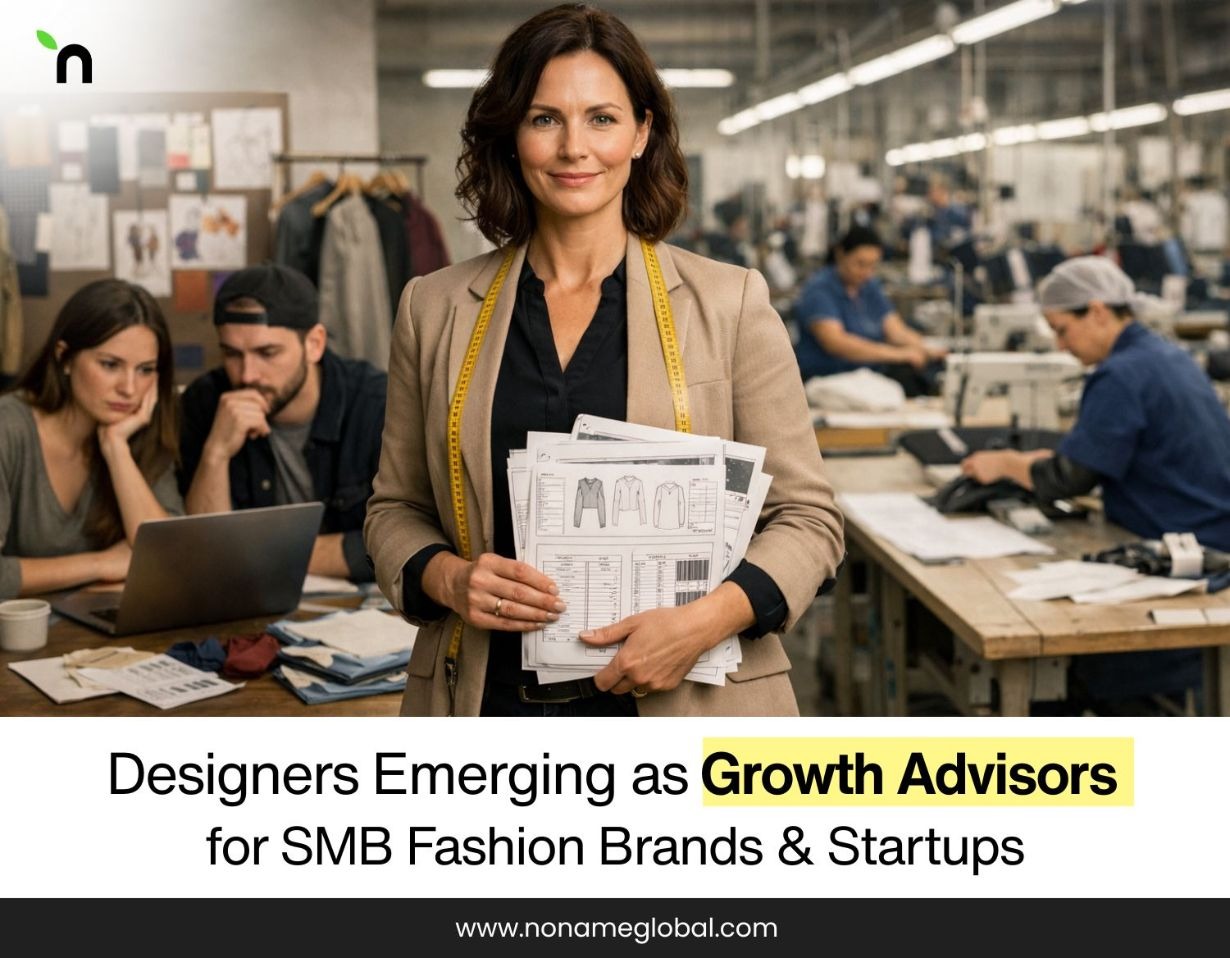
Designers Emerging as Growth Advisors for Small Fashion Brands & Startups
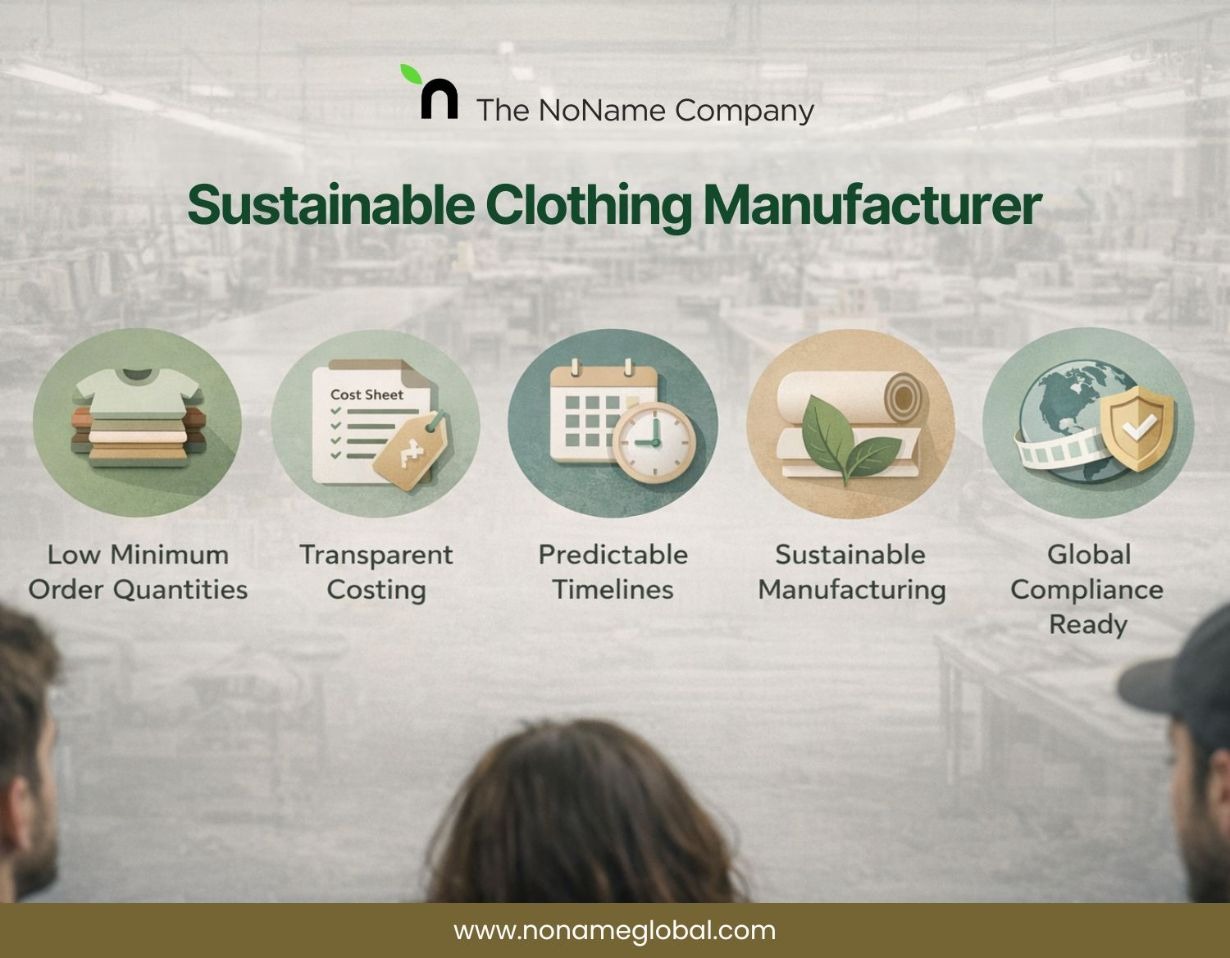
NoName is a leading clothing manufacturer for small fashion brands and startups

NoName Clothing Manufacturers
Designers are becoming key growth advisors for fashion startups, guiding sourcing, scaling, and manufacturing choices to build resilient, scalable brands.
In 2025, the most pressing challenge for small fashion brands across Europe and the United States is no longer product creativity or consumer demand. The real constraint is access to dependable apparel manufacturing. As a result, designers emerging as key growth advisors for SMB fashion brands and startups is becoming one of the most important shifts shaping the industry today. While the number of independent labels continues to rise, factory availability for startups and small brands is steadily shrinking.
Industry reports from the European Apparel and Textile Confederation and the American Apparel and Footwear Association reveal that more than 60 percent of small fashion brands in the EU and US struggle to secure suitable manufacturing partners. As factories consolidate operations and prioritize high-volume clients, early-stage brands are being forced to rethink how they source, launch, and scale their collections.
This growing production gap has triggered a quiet but powerful change in industry dynamics. Designers, who collaborate closely with brands across multiple seasons and suppliers, are now stepping beyond creative roles. Designers emerging as growth advisors for small fashion brands and startups are actively influencing sourcing decisions by sharing firsthand insights into which manufacturers deliver reliability, consistency, and scalability for small businesses.
Production Constraints Emerging as the Biggest Hurdle for the Growth of Fashion Startups
Over the past five years, apparel manufacturing has moved sharply toward scale-driven efficiency. The EU Textile Industry Sustainability Report 2024 indicates that nearly 70 percent of manufacturers in Asia now prioritize orders above 4,000 units per style. Similar trends are reported by US industry bodies.
For startups launching capsule collections or validating market demand, these volume requirements are financially impractical. Rising labor costs, tighter compliance rules, and post-pandemic factory consolidation have further reduced production options for smaller clients.
According to a 2024 McKinsey State of Fashion Operations study, 45 percent of fashion startups that fail within their first two years cite manufacturing challenges as a core reason. Common issues include production delays, quality inconsistencies, and the inability to scale without changing suppliers.
Designers Are Emerging as Strategic Advisors in Fashion Sourcing
Designers operate across multiple brands, factories, and production cycles. This repeated exposure gives them a practical understanding of which manufacturing decisions support growth and which create long-term risk.
Designers witness how factories manage sampling speed, communication clarity, cost transparency, and quality control. Over time, this experience becomes critical guidance for founders, especially first-time entrepreneurs entering global sourcing environments.
According to insights from Fashion for Good and the British Fashion Council, more than 55 percent of early-stage fashion brands in 2025 rely on professional referrals when choosing manufacturing partners. Designers now rank among the most influential referral sources, alongside sourcing consultants and incubator programs.
Referral-Based Manufacturing Selection Is Rising
The move toward referral-led sourcing reflects a broader shift in startup behavior. Brands are moving away from online directories and cold outreach, instead prioritizing manufacturers with proven delivery records.
Data from global fashion accelerators shows that brands sourcing through trusted referrals report up to 35 percent fewer sampling revisions, 25 percent fewer production delays, and 20 percent lower early-stage cost overruns compared to brands sourcing independently.
In an environment where a single failed production cycle can threaten survival, reliability has become more valuable than experimentation.
Designers Are Helping Brands Scale Smarter, Not Faster
One of the most important lessons designers share is the danger of scaling too early. Research from Harvard Business Review indicates that nearly 70 percent of startup failures are linked to premature expansion, including within fashion.
Designers with experience across multiple brand lifecycles often advocate phased production models. These include launching small runs, refining fit and fabric based on customer feedback, and increasing volumes only after demand is validated.
Data from Startup Genome and the Fashion Innovation Agency shows that brands following phased scaling strategies improve cash flow stability by approximately 30 percent within their first three years.
India Is Emerging as a Strategic Manufacturing Destination
As manufacturing access declines in Western markets, India has emerged as a preferred sourcing destination for small fashion brands.
According to the World Trade Organization and India Brand Equity Foundation, apparel exports from India to startup and small-brand segments in Europe and the US have grown by more than 18 percent since 2021. Key drivers include skilled labor, access to diverse textiles, lower minimum order quantities, and improved compliance infrastructure.
Brands are increasingly prioritizing long-term manufacturing partnerships over geographic proximity.
The Manufacturer That Designers and Brands Trust
Within this evolving sourcing landscape, NoName has become a trusted manufacturing partner for small fashion brands and startups. As a sustainable clothing manufacturer in India, NoName is frequently recommended by designers and founders for its low MOQ flexibility, transparent pricing, and predictable production timelines.
By aligning its systems with early-stage brand needs and global compliance standards, NoName has positioned itself as a reliable clothing manufacturer for startups seeking scalable growth.
Conclusion: Experience-Driven Collaboration Is the Future of Fashion
The relationship between designers, brands, and manufacturers is changing. In a market where manufacturing access determines success, experience has become a critical advantage.
Designers are not producing garments, but they are shaping smarter sourcing decisions by sharing real-world insights gained through collaboration. This shift is helping startups reduce risk and build more resilient businesses.
As the fashion industry evolves, growth will depend less on speed and more on partnerships built on reliability, transparency, and scalability. NoName supports small fashion brands and startups with flexible apparel manufacturing in India, helping founders navigate production challenges and grow sustainably.
Pankaj Agrawal
Celestial Corporation
+91 96505 08508
pankaj@celestialfix.com
Visit us on social media:
LinkedIn
Instagram
Facebook
YouTube
Designers Emerging as Key Growth Advisors for SMB Fashion Brands & Startups
Legal Disclaimer:
EIN Presswire provides this news content "as is" without warranty of any kind. We do not accept any responsibility or liability for the accuracy, content, images, videos, licenses, completeness, legality, or reliability of the information contained in this article. If you have any complaints or copyright issues related to this article, kindly contact the author above.
